Striking Distance Keywords: Edit the Prose, Not the Meta
Summary
Striking distance keywords are the search terms sitting in positions 11 to 20, just off page one, and most SEO guides fix them with word count and header tweaks. That rarely works. The real blocker is usually the prose itself: vague ledes, buried answers, and copy that reads like a corporate deck instead of an article. This piece shows the audit, the rewrite, and the prioritization framework for closing that gap page by page.
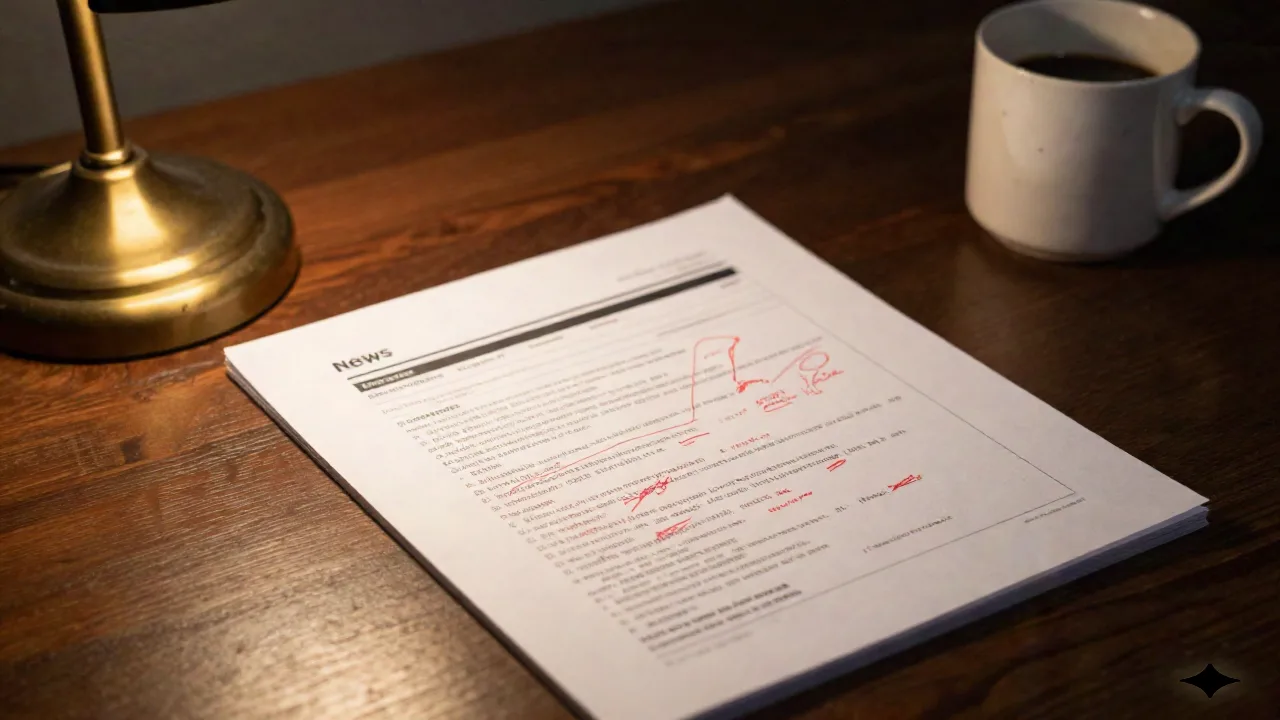
Desk 3, 9:14 am. A traffic report lands with forty-one striking distance keywords, queries sitting in positions 11 through 20, one solid edit away from page one, and nobody on the team has opened the file in six weeks. That is the real problem with striking distance keywords: everyone agrees they are the cheapest wins in SEO, and almost nobody does the boring work of fixing the page. This piece is that boring work, laid out the way a copy desk would run it: audit, rewrite, prioritize, ship.
What Counts as a Striking Distance Keyword, Exactly?
Google Search Console calls it position 11 to 20. Some tools stretch the range to 30. Either way, striking distance keywords are the queries your page already ranks for, just off the front page, where click-through rate drops hard and traffic all but disappears. Queries that slip past position ten lose the bulk of their potential clicks, even when the ranking gap is a handful of spots. That is the entire appeal: you are not starting from zero. Google already trusts the page enough to index it, crawl it, and rank it in the ballpark. The work left is editing, not building.
Most guides treat every keyword in that band the same, a flat list of low-hanging fruit. It is not that simple. A page stuck at position 14 for a single search term and a page stuck at position 14 for forty related terms are different repair jobs, and the fix rarely starts where the guides send you first: the meta description.
Position 12 Is Not a Content Problem. It Is a Voice Problem.
Every generic fix for striking distance keywords opens with the same move: add more words, add more headers, add an FAQ block. Sometimes that works. More often, the page already has the words. It has the headers. It has 1,400 serviceable, forgettable words that read like they were assembled from a briefing document instead of written by someone who cared whether you finished the paragraph.
Here is a paragraph filed by a client last month, the kind that sits at position 13 for months without moving:
"Our platform offers a comprehensive suite of tools designed to help businesses streamline their content creation process. With an intuitive interface and powerful features, users can efficiently manage their workflow and achieve their content goals."
Four sentences. Zero information. No number, no name, no verdict, nothing a reader could not have guessed before clicking. Desk 3 marked it up in under a minute:
"The dashboard shows every draft's word count, keyword density, and publish date on one screen, so an editor with six writers can see who is behind before the Monday standup instead of after it."
Same claim, that the product organizes your content work, one sentence, one concrete detail, one reason to keep reading. That rewrite did not add length. It replaced marketing language with a fact a reader can use, and that is the difference between a page Google tolerates at position 13 and a page it moves.

The Three-Question Audit That Flags a Stalled Page
Before rewriting anything, run the page through three questions. Desk 3 uses this order because each one eliminates a different failure mode, and there is no point polishing prose on a page that is broken for a structural reason.
First: does the page actually match the intent behind the keyword? A striking distance keyword that pulls mostly product pages will not move for an opinion piece, no matter how well it is written. Check the top ten results before touching a word.
Second: does the first paragraph answer the query, or does it warm up first? Pages that open with a paragraph of context before the actual answer lose readers before Google gets a signal that the content is worth ranking higher.
Third: does the page sound like it was written by someone with a stake in the answer, or by a template? This is the question most SEO checklists skip, and it is usually the one holding the page at position 12.
A page that fails question one needs a different target page, not a rewrite. A page that fails question two needs its lede moved up. A page that fails question three needs an editor, not more words.
Rewrite the Lede Before You Touch the Meta Description
Most striking distance guides send you straight to the meta description: shorten it, add the keyword, tighten the pitch. Fair enough, but the meta description is not what convinces Google to rank you higher. The opening paragraph is.
Take a page ranking at position 15 for a scheduling tool keyword. Original opening:
"In today's fast-paced business environment, finding the right scheduling solution can be challenging. There are many factors to consider when choosing a tool that fits your team's needs."
Nothing there answers anything. It could open an article about any software category on record. The rewrite:
"Most scheduling tools break the moment two time zones and one recurring meeting collide. This one does not, and here is the setting that fixes it."
The second version commits to a claim in the first sentence. It gives the reader something to verify or argue with. That is what an answer-first paragraph does: it treats the reader like someone who typed a question and wants the answer before the pitch, not after it.
The meta description matters for click-through rate once you are already ranking. The opening paragraph is what earns the ranking in the first place. Fix the order, not just the field.

Which Striking Distance Keywords Are Worth an Hour of Editing
Not every keyword in positions 11 through 20 deserves the same attention, and treating them as a uniform bucket wastes the one resource that actually moves rankings: editing time.
Skip the keyword if the page it points to cannot carry a real answer, a thin FAQ page ranking for a broad informational term it was never built to own. No rewrite fixes a mismatch between what the page is and what the query wants.
Skip it if the top three results are dominated by a format you cannot compete with: video carousels, a single authoritative reference source, or a result where Google answers the query directly on the results page.
Prioritize the keyword if it already sits in positions 11 to 15, closer to the door than the ones at 18 or 19, if it carries commercial or high-intent phrasing, and if the current page has an editing problem rather than a structural one, meaning the fix is a rewrite, not a rebuild.
Worth the hour: a page one clear rewrite away from a real answer. Skip the hour: a page that would need a different angle, a different format, or a different target entirely to have a shot at page one.
Internal Links Are Citations, Not Filler
Every striking distance checklist tells you to add internal links. Most treat this as a mechanical step, three links, keyword-rich anchor text, done. That is how a page ends up full of links nobody clicks, with an anchor text pattern that reads like it was generated, because it was.
Desk 3's rule: an internal link only survives the edit if the sentence around it would make sense to a reader who skips the link entirely. "For more on this, see our guide to X" is filler. "The audit above only covers the opening paragraph; the structural version of this same fix is a longer job, covered separately" is a citation, and readers follow citations because the sentence earned their trust first.
This matters more than it used to. Ranking well in Google's traditional results now feeds directly into whether AI systems cite a page at all, and a page dense with real internal citations reads as more credible to both the algorithm and the reader, for the same reason: it behaves like something a person built on purpose.

What Tools Actually Help, and Which Ones Just Add Words
None of this requires a subscription. It requires an editor's attention and about an hour per page. That said, a few tools shorten the audit step, and it is worth knowing which ones sharpen the prose and which ones just pad it.
Surfer scores a draft against the pages already ranking for a target keyword, term by term. It is genuinely useful for the audit above, spotting what the top three results cover that a page does not. It will not write the sentence that saves the paragraph. That part stays with the editor.
Jasper is fast for a first draft and can hold something close to a brand voice once it is trained on samples. Left alone, it still defaults to the same "comprehensive suite of tools" language that got a page stuck at position 13 in the first place. Treat its output as raw material for an edit, not a finished paragraph.
Copy.ai earns its keep on volume work: meta description variants, FAQ drafts, the scaffolding around a piece. It is a poor fit for the opening paragraph, the one sentence that has to sound like it was written by someone with an opinion.
Notion AI's real advantage is not the writing, it is that the audit, the draft, and the priority list can live in the workspace a team already checks daily, so the striking distance list does not die in a spreadsheet nobody reopens.
What We Would Actually Fix First
Pull the striking distance report. Cross off anything that fails question one from the audit above; wrong intent, no rewrite fixes that. Of what is left, start with the pages ranking 11 to 15, because that is where an hour of editing moves the needle fastest. Rewrite the opening paragraph before the meta description. Add internal links that would survive being read as sentences on their own.
None of this is complicated. Most of it will not fit in a sprint board with a tidy checkbox name. It fits in an hour with a red pen and the honesty to admit the page was never thin. It was just badly written.
Filed. Printer's Row, 11:52 pm.