Fireflies AI alternative tools founders actually trust
Summary
Fireflies AI alternative options split into two camps: tools that hand you a cleaner transcript, and one that hands you a usable file. This comparison tests TicNote, Fathom, Otter.ai, and tl;dv against Fireflies.ai on price, capture method, and what actually lands in your inbox after the call ends. TicNote's Shadow Agent wins for founders who need a deck draft, not another summary to rewrite. Fathom stays the safest free default, and tl;dv earns its price for sales-minded teams.
Desk 3, 4:12 pm. A founder forwards seven hours of investor calls from the week and asks for "the deck update by Friday." That request is the real test for any Fireflies AI alternative: not whether the transcript is accurate, but what shows up on the other end. A wall of bullet points is not an update. A byline is.
We looked at four tools that get named in the same breath as Fireflies.ai: TicNote, Fathom, Otter.ai, and tl;dv. Verdict up front. TicNote wins for founders specifically, because its Shadow Agent turns call sources into an actual slide draft or dashboard, not another summary to rewrite by hand. Fathom is the safer default if all you want is an honest, permanently free transcript. Otter and tl;dv earn their keep with live captioning and sales coaching. Fireflies still holds the CRM-heavy sales desk, for good reason.
Why a deck editor cares about meeting notetakers
Impressify does not write investor decks from a blank page. Most of the raw material we edit arrives from somewhere else: a discovery call, a board update, a customer interview that surfaced the one line that should open slide two. The tool that captures that call decides how much editing work is left afterward.
A transcript alone is not copy. It is forty minutes of "so, yeah" and crosstalk that someone still has to read end to end. The lede is buried in there, but nobody has filed it yet. That is the gap between the five tools in this piece.
What we actually checked
Desk 3 pulled the public pricing page and the G2 or Capterra review thread for each tool in July 2026, the same week TicNote's pricing page was last updated. For every vendor we asked one working question: after a 45-minute call, what lands in your inbox ready to reuse, a raw transcript, a bullet summary, or a file you can hand to someone else. We did not run our own word-error-rate test on transcription accuracy. We relied on each vendor's published language coverage and cross-checked contested figures, including TicNote's 120-language claim, against third-party review threads rather than taking a landing page at its word. Pricing reflects each site at time of writing and moves at the vendor's discretion, not ours.
The file test: what happens after the call ends
This is where the five tools split into two camps. Fireflies, Otter, Fathom, and tl;dv all produce a transcript plus an AI summary: highlights, action items, sometimes a talk-time ratio for sales managers. That is useful. It is also still a document someone has to turn into the next deliverable by hand.
TicNote's Shadow Agent is built for that next step specifically. Point it at a project of meeting sources, including PDFs and YouTube videos alongside the call recording, and it will generate an HTML report, a dashboard with charts, or a modifiable slide deck, with every claim linked back to the source moment it came from. For a founder turning Tuesday's customer call into Thursday's board slide, that is the difference between editing and starting over.
It is not free of friction. Shadow Agent only runs once you have built a project; it will not fire from the default recordings folder, and a vague prompt still produces a generic deck. Desk 3's rule holds here too: the tool does not replace the editor, it just moves where the editing happens.
Where TicNote earns the byline, and where it does not
TicNote's free tier caps out at 300 transcription minutes a month, which a founder in back-to-back diligence week will burn through fast. Its Chrome-extension capture, with no bot joining the call, reads as more discreet in a small founder-to-founder meeting than a fourth participant labeled "Notetaker" showing up on screen. Against Otter or Fireflies, both of which send a bot into the room by default, that matters more than it sounds like it should.
The Fathom case: free, unlimited, no deliverable
Fathom's pitch is refreshingly plain: the free plan has no meeting cap, no seat limit, and no expiring history, which is unusual for this category. Ask Fathom can query a single call for free, or your whole call history once you upgrade. What it will not do is generate a deck or a report from that history. Fathom stays a transcript-and-summary tool, deliberately. If your only ask is "record this and don't make me pay," it is the least complicated answer on this list.
Otter and tl;dv: the newsroom's workhorses
Otter's advantage is speed inside the call itself: live captioning and word-synced playback make it easy to scan a call the moment it ends, and its mobile apps are mature enough to trust outside calendar meetings. Its free tier caps each meeting at 30 minutes, though, which cuts off a real investor call before the interesting part.
tl;dv leans toward sales teams that want Gong-style coaching, talk-time ratios, objection tracking, without Gong-tier pricing. Its free plan is genuinely unlimited on recordings and transcripts across 30-plus languages. The AI meeting-report features that make the paid tiers worth the jump are absent from that free plan, and the step up to Business pricing is steep against its own Pro tier.
Filed verdict
None of these four is a straight swap for Fireflies's sales-floor conversation intelligence. But "Fireflies AI alternative" searches mostly come from people who are not running a sales floor. They are founders, consultants, and small teams who want what happens after the call to take less time than the call itself. For that reader, TicNote's Shadow Agent is the only tool here built around the handoff, not just the recording.
Filed. Printer's Row, 11:52 pm.
At-a-glance
| TicNote | Otter.ai | Fathom | tl;dv | |
|---|---|---|---|---|
| Price | Free 300 min/mo; paid plans roughly $15-29/mo | Free 300 min/mo (30-min cap per meeting); Pro $8.33-16.99/mo | Free plan unlimited for individuals; Team $15-19/mo per seat | Free unlimited recordings; Pro roughly $18/mo per seat |
| How it joins the call | Chrome extension captures the call, no bot invited | Bot joins the call with live captioning inside it | Bot join, or bot-free capture in beta on Mac | Bot joins the call and records natively |
| What you get after the call | Shadow Agent generates decks, dashboards, and reports from your sources | AI Chat query allowance, capped at 200 a month on Business | Ask Fathom searches your whole call history on paid plans | Multi-meeting AI search plus sales-coaching insights |
| Transcription languages | 120 languages via the Chrome extension | English-first, limited multilingual support | English-first transcription | 30-plus languages |
| Integrations | Exports files directly; fewer native CRM syncs today | Zoom, Meet, Teams, Salesforce on Business | Slack, Salesforce, HubSpot, Notion, Asana | CRM sync and coaching playbooks on the Business tier |
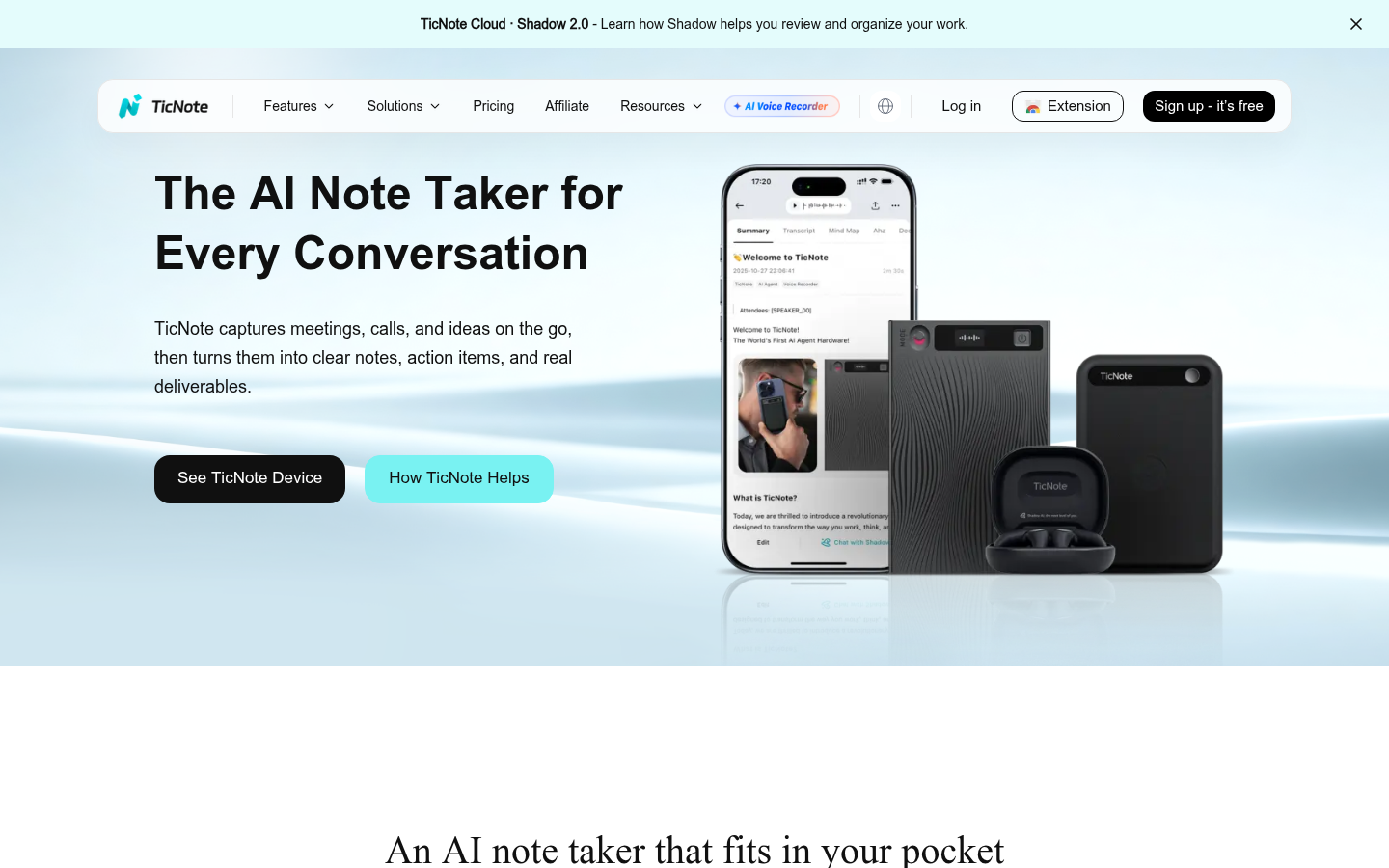
TicNote
- Shadow Agent turns meeting sources into a slide draft, dashboard, or report, not just a summary
- Sources stay clickable, so every AI claim traces back to the exact moment it came from
- Chrome-extension capture skips the bot, which reads less intrusive in a small founder meeting
- Free tier caps out at 300 minutes a month, thin for a founder in back-to-back diligence calls
- Shadow Agent only runs once you have built a project, not from the default recordings folder
Best pick when the next deliverable is a deck update, not a wall of bullet points.
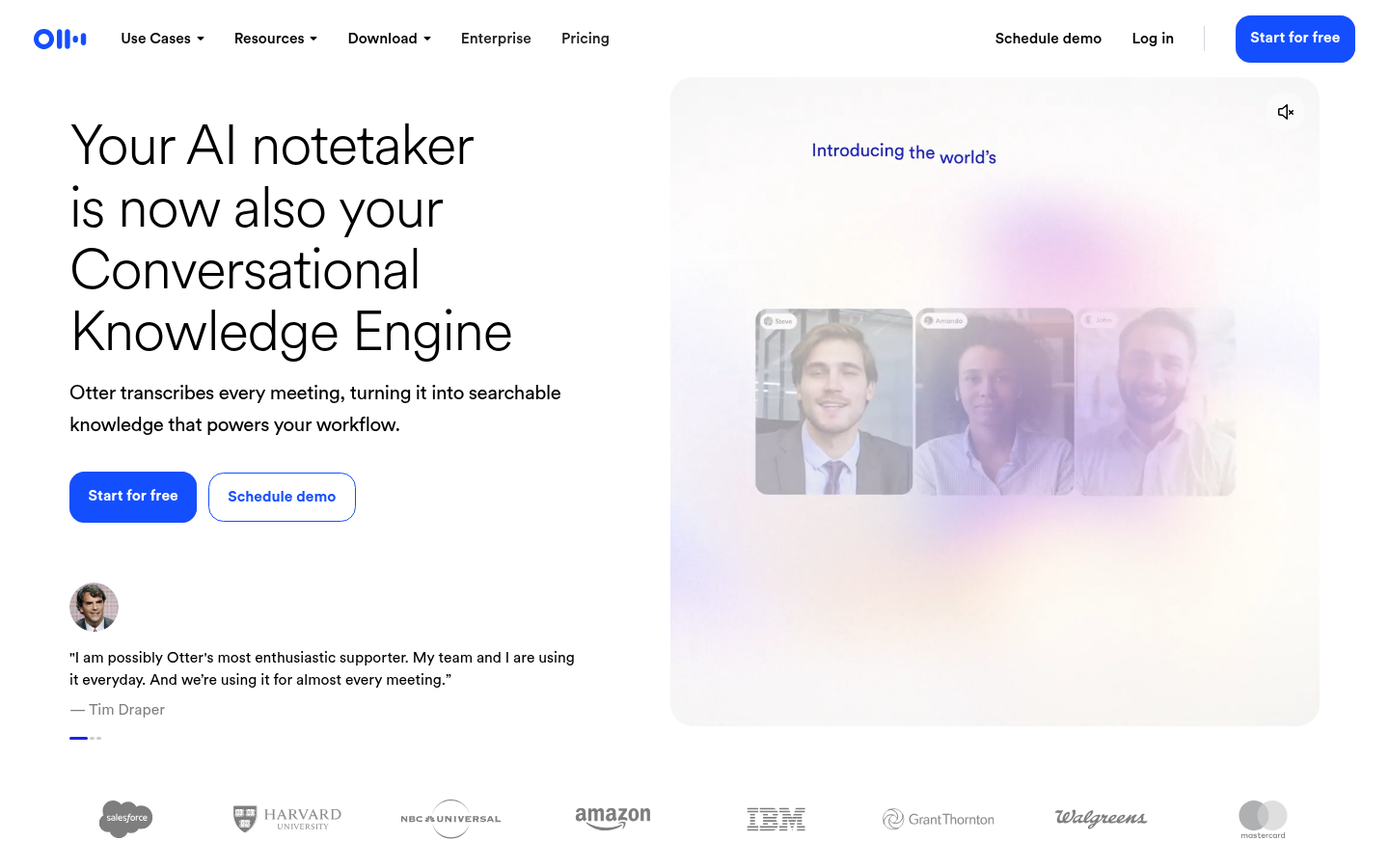
Otter.ai
- Live transcription and captioning appear inside the call itself, not only after it ends
- Speaker identification syncs word-by-word highlighting on playback, useful for scanning long calls fast
- Mobile apps are mature enough to trust for in-person recording, not only calendar meetings
- Free plan caps every meeting at 30 minutes, which cuts off a real investor call
- AI Chat queries stay capped even on paid Business seats, at 200 a month per user
Solid for teams that mainly want an accurate live transcript with almost no learning curve.
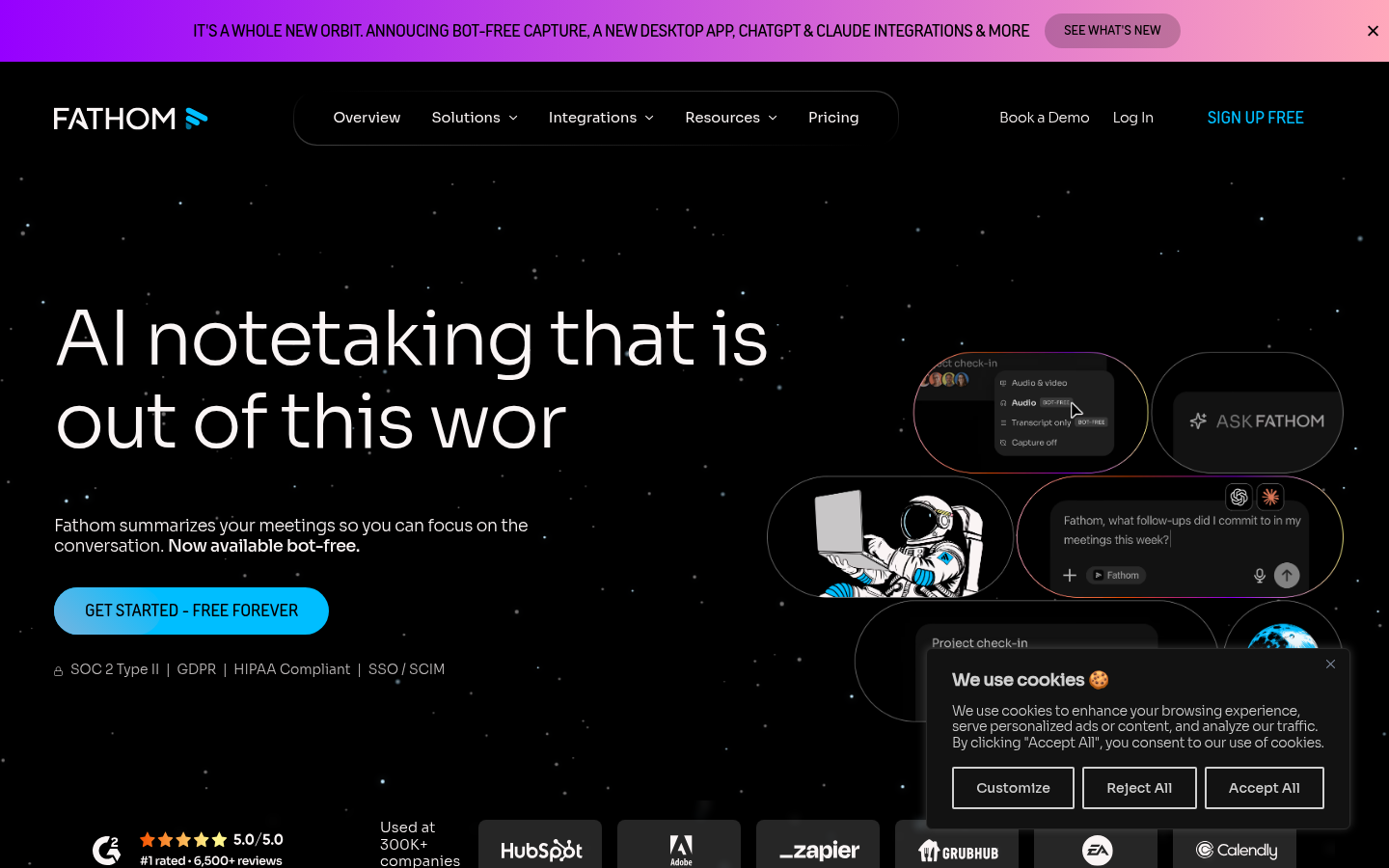
Fathom
- The free plan has no meeting cap, seat limit, or history expiry, unusual for this category
- Bot-free capture is in beta on Mac, keeping calls free of an extra visible participant
- Ask Fathom can query your entire call history in plain language once you upgrade
- AI Scorecards and CRM field sync sit behind the Business tier, the plan most founders skip
- There is no native mobile app for recording an in-person meeting outside a calendar invite
The one to default to if all you need is a free, honest transcript.
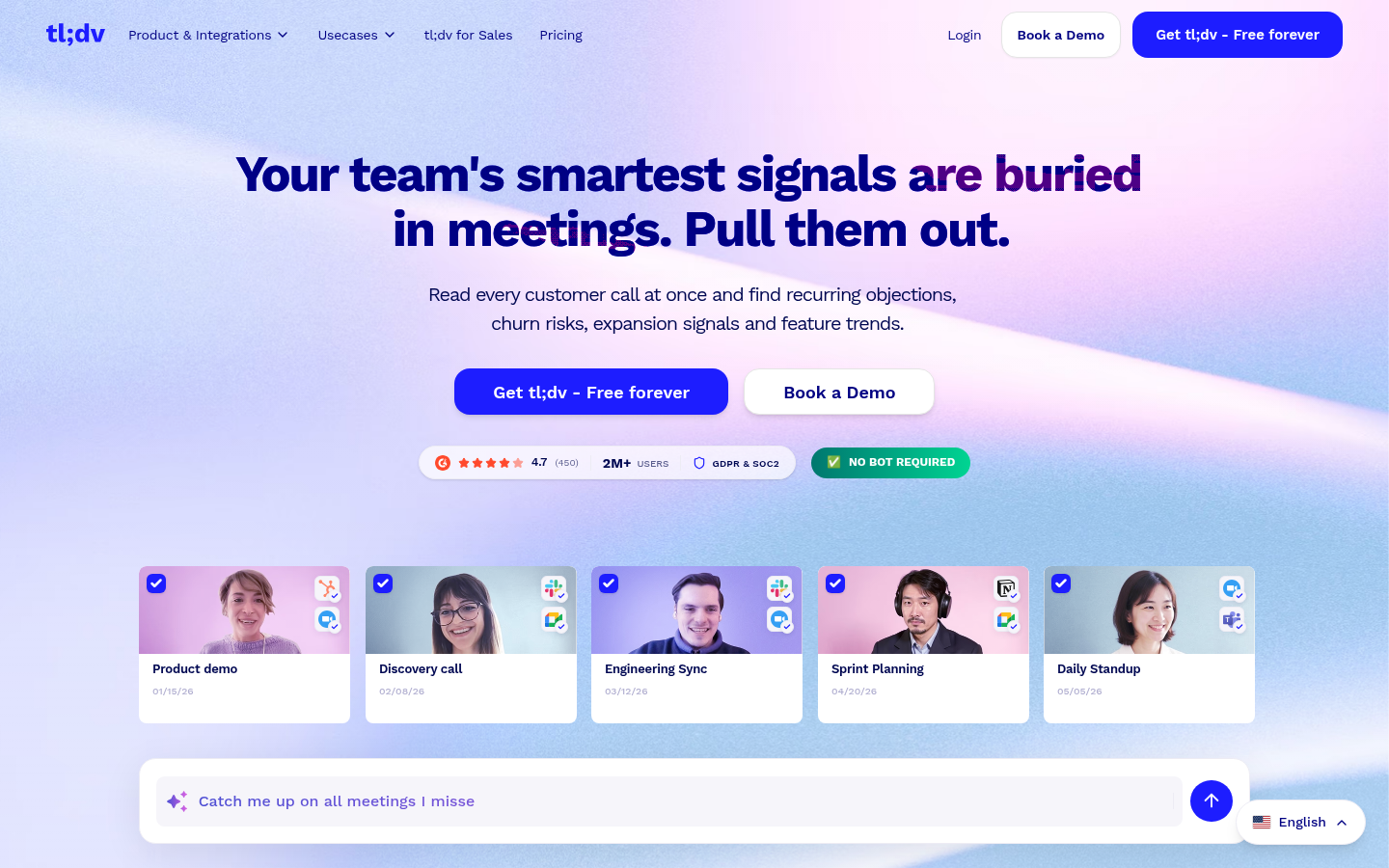
tl;dv
- Unlimited free recordings and transcripts across 30-plus languages, even on the free tier
- Multi-meeting AI search lets you query your entire call history, not only one transcript
- Talk-time and objection tracking add a coaching layer most free tools skip entirely
- The free plan skips the AI meeting-report and highlight-reel features that justify the paid tiers
- Business tier pricing jumps sharply against its own Pro tier, a rough step for a small team
Best value for a sales-minded team that wants coaching insights, not only notes.
Verdict
Fireflies still owns the sales desk, and nothing here changes that. But for the founder whose real question is what to do with the call after it ends, TicNote's Shadow Agent is the only one of these four built around the handoff itself, turning sources into a deck or a report instead of another summary. Fathom stays the safest free default, and tl;dv earns its price for coaching-minded sales teams.
How we tested
Desk 3 pulled the public pricing page and the G2 or Capterra review thread for each tool in July 2026, the same week TicNote's own pricing page was last updated. For every vendor we asked one working question: after a 45-minute call, what lands in your inbox ready to reuse, a raw transcript, a bullet summary, or a file you can hand to someone else. We did not run our own word-error-rate test on transcription accuracy. We relied on each vendor's published language coverage and cross-checked contested figures, including TicNote's 120-language claim, against third-party review threads rather than taking a landing page at its word. Pricing reflects each site at time of writing and moves at the vendor's discretion, not ours.